
Grove Runtime
A Grove is a small, bounded, navigable website inside Musewoods. It can hold an idea, a venture, an institution, a research field, or another body of work that needs more structure than one article but less machinery than a separate application. Each Grove owns its identity, namespace, navigation, pages, visibility, and local assets while remaining inside the common Musewoods publishing system. This Field Manual is one such Grove, rendered on Soil.
The Guide's canopy mark belongs to that Grove identity and is declared in the manifest as both logo and identity.mark. It is therefore a masthead and navigation mark, not a decorative hero image attached to this page. The wider canopy.svg asset remains available later in this page only as authored media inside a feature-band specimen.
The Two Manifests
Grove publishing is governed by two different manifests that answer two different questions. The field-level content/groves/manifest.yaml owns the front door to the Groves field: its collection identity, entry presentation, and the explicit order of listed Groves. The manifest.yaml inside an individual Grove owns that Grove's local identity and behavior: its name, navigation, visibility, Ground, footer, logo, and related metadata.
The distinction prevents filesystem discovery from becoming accidental publishing policy. A Grove can exist and remain directly routable without being admitted to the /groves front door when its individual manifest sets visibility: unlisted. The Musewoods Resonance Grove uses that path intentionally. The separate content/resonance/manifest.yaml is not a third Grove manifest; it belongs to the cross-field Resonance circulation layer and must not be folded into Grove discovery or field navigation.
Two Manifests, Side By Side
The collection contract
schema: musewoods.groves.manifest/v1
title: The Groves Field
entry:
  render: field-entry
entries:
  - governed-data-foundry
content/groves/manifest.yaml owns the field collection and the explicit entries: ordering. It answers which Groves appear at the front door and how those entries are presented; it does not own the identity or page navigation of any individual Grove.
The local site contract
name: The Musewoods Field Manual
kind: grove
visibility: listed
logo: images/logo.png
identity:
  mark: images/logo.png
navigation_groups:
  - id: foundations
    label: Foundations
navigation:
  - page: index
    label: Start
    group: foundations
content/groves/<slug>/manifest.yaml owns the local site. The manifest validator rejects unsupported keys rather than synthesizing missing behavior, because identity, visibility, and navigation are publishing decisions rather than presentation defaults.
The Groves Arrival
The field-level front door (/groves) is not a single view of the field — it holds four distinct jobs, each answering a different question about the same underlying entries (lib/groves/field-entry.mjs, lib/groves/woods-model.mjs):
- The Woods — What lives here? The canonical, identity-oriented
presentation: one spacious entry per Grove, its own title, description, and Now Growing. The default view.
- Terrain — What territory do they share? Groves grouped by the
shared territory they opt into (field.terrain, validated against the GROVE_TERRAINS registry in lib/groves/terrain.mjs). A Grove may inhabit more than one terrain, or none.
- Directory — Where is the Grove I need? The complete, compact,
retrieval-oriented index — the original field-entry presentation, unchanged, now one of three arrival views.
- The Canopy — What is alive right now? Not a fourth listing mode. A
quiet, present-tense read of the Woods, rendered server-side directly in the route (canopyModel, app/groves/[[...slug]]/page.tsx): a real Grove count, held as quiet contextual metadata, and a bounded slice of the Woods' current Now Growing — its principal, most visually emphasized content.
Search the Woods (searchGroveEntries) is one shared query that filters The Woods, Terrain, and Directory consistently — it is not a fifth view, and it shares one compositional region with the view switcher (GrovesArrival.tsx, [data-groves-controls]) rather than living as a separate toolbar.
Now Growing is the living-edge primitive this front door depends on. A Grove's own manifest may declare field.grow: { title, status } — its current inquiry, not a description of what the Grove is. Every surface that shows Now Growing (a Grove's own field-entry, The Woods, Terrain, and The Canopy) reads the same field.grow value through the same model; none of them derive or hardcode their own copy. A Grove with no field.grow simply contributes nothing to Now Growing anywhere — never a fabricated inquiry.
The Page Pipeline
Discovery
Each first-level directory under
content/groves/is a Grove and each direct.mdfile inside it is a page. Discovery remains shallow; directories such asimages/andartifacts/belong to the Grove's local asset universe, not to page routing.Parse
parseGrovePagereuses the structural Storyboard parser: one document H1,**Key:** valuefields, and ordered semantic blocks such as prose, list, quote, table, code, Mermaid, image, and Math ({{math: ...}}/:::math, AsciiMath rendered as sanitized MathML). Grove normalization then interprets each authored section through the Grove motif vocabulary.Validate
validateGroveMotifchecks structural contracts such as required fields, item cardinality, and bounded motif vocabularies. Structural impossibilities fail loudly; density and editorial taste remain authoring concerns unless a specific fit rule has been encoded as a warning.Resolve
Relative assets are resolved inside the Grove's own directory. Collection motifs can resolve content from another Musewoods field at build time by reference, preserving the other field as the source of record rather than copying its content into the Grove.
Render
GroveShellestablishes the local identity, navigation, and Ground boundary, while the Grove motif registry selects the component responsible for each section. Shared editorial and analytical motifs still use their common semantic models; the Grove host contributes the surrounding editorial treatment.
An Authored Artifact

An artifact gives an authored image spatial authority while keeping ownership clear. Musewoods controls the caption, safe area, and surrounding rule, but the asset itself remains authored media: the renderer does not darken, invert, or recolor an SVG simply because the Grove is on Forest Floor. System-owned marks and interface surfaces consume Ground tokens; authored imagery keeps its own visual identity.
Ground
| Concern | soil | forest-floor |
|---|---|---|
| Environment | Warm paper and ink | Earthy charcoal, warm ivory, moss, seed, mineral |
| Chosen when | no Ground override is authored | ground.mode: forest-floor |
| Token model | shared semantic Ground roles | the same roles, re-toned |
| Component rule | consume semantic tokens | consume semantic tokens; do not branch on the Ground name |
| Analytical pairing | chart series identity remains stable; surrounding surface follows the host | same rule |
| Boundary | data-ground on the Grove shell | data-ground on the same shell; unrelated Musewoods surfaces are not globally re-toned |
Ground is an authored editorial environment, not browser dark mode and not a reader preference. It is resolved before the Grove is rendered so the first HTML already carries the correct surface rather than flashing through another mode during hydration. A component should therefore consume semantic tokens and remain structurally identical across Grounds; a separate Forest Floor component is normally evidence that the abstraction has leaked presentation into behavior.
For side-by-side inspection, the Grove Presentation Laboratory runs on Soil and the Forest Floor Laboratory exercises the same design discipline on Forest Floor.
The Filesystem, As Owned By The Grove
A Grove's directory is its local authoring boundary. Relative references stay inside that boundary, which makes the package portable and prevents one Grove from depending accidentally on another Grove's private asset tree.
content/groves/musewoods-field-manual/
├── manifest.yaml
├── index.md
├── publishing-fields.md
├── trailheads.md
├── trailmaps.md
├── ...one Markdown file per page
├── images/
│   ├── logo.png            512×512 canopy mark used by masthead/navigation
│   └── canopy.svg          authored wide media specimen
└── artifacts/
    ├── pipeline.svg
    └── reel-01.svg, reel-02.svg, reel-03.svg
A relative authored reference such as **Image:** images/logo.png passes through resolveGroveAssetRef and becomes a bounded /grove-assets/<slug>/... request served by the Grove asset route. The manifest logo contract is stricter than ordinary authored media: the identity mark must satisfy the platform's supported image-format and dimensions contract, while other local image and artifact references primarily need to resolve inside the Grove's asset boundary.
Figure 1
Rendering diagram…
The Shared Media Motifs, In Grove Voice

One semantic contract, expressed as place
feature-band, quote-panel, and reel share their normalized model and rendering behavior across the fields that host them. The Grove adapter supplies the surrounding spacing, editorial width, accent, and Ground-aware surface; authored media remains untouched inside that frame.
A Voice, Given Room
The strongest extension is often the one we decide not to add because an existing motif already carries the responsibility.
A Bounded Sequence
Three authored studies, navigated as one bounded sequence. Controls and chrome belong to the Grove surface; the authored images retain their own rendering.
Discover.
Frames From A Viewgraph
Developer Guide
Viewgraphs reveal
A viewgraph is the atomic visual unit. The word "slide" is not part of the Musewoods vocabulary.
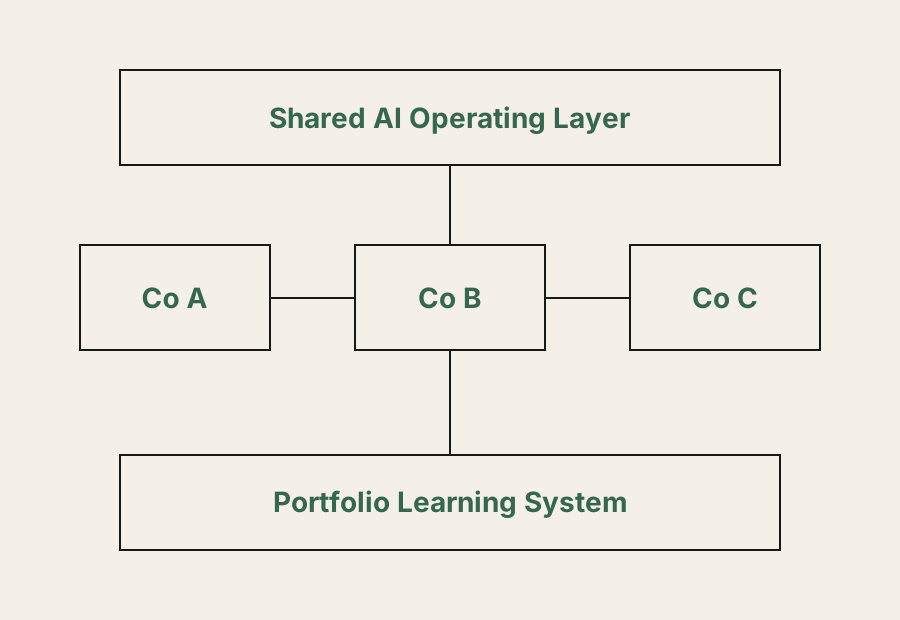
The Field Manual's Viewgraph specimen is reused frame by frame. The reel embeds canonical Viewgraph frames rather than the Viewgraph application shell, so the Grove Ground stops at the viewport and the Viewgraph remains the source of record.
Voices From The Build
"Source should fail where structure becomes impossible, not where an author has merely made an aesthetic choice."
The content check
scripts/validate-content.mjs
Growing Edges
Second-level Grove pages
dormant
The current Grove routing model remains intentionally shallow: one navigation level of pages inside one bounded local site. A second routing level would add hierarchy to discovery, validation, navigation, and asset-relative reasoning, so it should be introduced only if real Groves repeatedly need that structure rather than as speculative flexibility.
Per-Grove Canopy (topology / semantic map)
seed
A separate specification (docs/musewoods-grove-canopy-v1.0.md, docs/grove-canopy-v1.0-specification.md) defines an optional, richer per-Grove interactive front door — a topology and interaction grammar through which a visitor explores one Grove's intellectual structure directly, rather than only through its authored chapter sequence. Do not confuse it with The Canopy described above, which is the field-level /groves front door's present-tense view across all Groves and is already shipped. Neither lib/groves/ nor components/groves/ implements the per-Grove specification today; no Grove renders it, and it should not be presented as available until a registry, normalizer, and validator exist in the codebase.
Groves As Clearing Projections
semantic-projection
A Grove already owns the durable place-like concerns a human-facing Clearing needs: identity, navigation, pages, assets, Ground, and a living editorial edge. The Clearing design therefore treats Grove as the natural projection surface for a subject-centered context field while keeping semantic relations and provenance in a separate cross-field context layer. The Grove remains kind: grove; the context system supplies assembled meaning rather than creating another canonical publishing pipeline.
canonical-ownership
A Clearing-aware Grove should reference or assemble Stories, Journals, Viewgraphs, and other Groves by stable identity and typed relationship. Long-form source remains owned by its canonical field. See Clearing System for the normative boundary.
Elsewhere In Musewoods
- The Field Is the JoinA regenerative supply-network architecture that keeps agricultural products computationally connected to the fields, production histories, landscapes, evidence, economics, and markets that give them meaning.
- The Governed Data FoundryA reference architecture for governed enterprise state in the agentic era — organized here as a bounded Grove that connects the standing Journal thesis, its ten-layer stack, and its Viewgraphs adaptation into one navigable place.
- Governing Autonomous AuthorityA living inquiry into how risk and compliance change when autonomous systems move from generating recommendations to exercising delegated authority inside operational workflows.
- Musewoods: The Living EcologyA living Grove distilled from The Book of Musewoods: an ecology of exploratory intelligence for preserving inquiry, cultivating ideas, governing consequence, regenerating prosperity, and returning what reality teaches to the Woods.
- Musewoods Field GuideThe canonical v9 field guide for inhabiting Musewoods as an Exploratory Intelligence System. It maps the people, epistemic terrain, navigation, instruments, language, culture, motifs, intelligence, Resonance, world boundary, and stewardship practices that make the Woods explorable.
- Regenerative ProsperityA living body of knowledge integrating the Regenerative Prosperity Model, the RPM Flywheel, Regenerative Systems Thinking, and the RPM Decisioning System into one coherent operating architecture for regenerative prosperity.